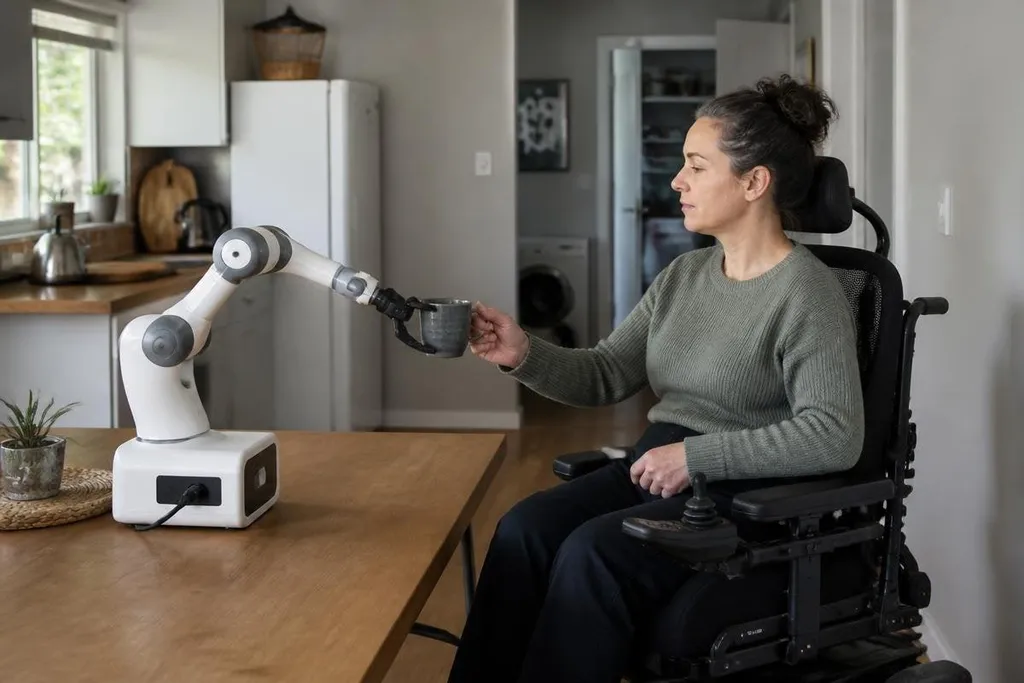
An assistive robot can matter most to the person who has the least room in their budget. That makes access a practical question: who needs the robot, who pays for it, and who decides if it works well enough?
- Cost is only one part of access; setup, training, repairs, and space matter too.
- A useful policy starts with the person’s daily task, not the robot’s label.
- Safety, consent, and control must stay with the person using the system.
Start with the task
“Assistive robot” covers many kinds of help. A system may support movement, bring an object within reach, help with communication, or guide a care task. Those jobs place different demands on the robot and the person using it.
The first question should be clear: what task must become easier, safer, or less tiring? A person who needs help reaching items has a different need from someone who needs support with mobility. Treating them as one market can send money toward a machine that solves the wrong problem.
The assessment should also include the setting. A robot that works in a clinic may not fit a small home. Door width, floor type, charging space, noise, network access, and the presence of a support person can all change the result.
Price is only the first barrier
A purchase price tells you little about the full cost of access. The person may also need installation, software updates, training, replacement parts, and service visits.
If those costs are unclear, the buyer cannot compare the robot with other forms of support. Public funding, insurance, care providers, charities, and a person’s workplace may each play a part in payment.
The rules differ by location and by need, so a robot can be available in theory while staying out of reach for the person who needs it. Access also includes time: a long assessment, a limited trial, or a slow repair process can stop someone from using a system when they need help most.
A fair process should state who owns the robot during a trial and what happens if the system fails.
Ownership and failure rules sit beside a harder question: who controls the robot during use? Assistive robotics reporting can place that question beside the named machine, trial terms, and control method.
Control belongs to the person
An assistive robot handles parts of a person’s daily life. That means the user should know what the robot senses, what data it stores, and who can view that data. They should also be able to stop the robot without asking a remote operator for permission.
Consent needs to stay active. A person may agree to one task and reject another, or change their mind after using the system. Family members and care staff can offer support, but their convenience should not replace the user’s choice.
Safety needs a plain test. If the robot loses power, drops a load, loses its network connection, or reads a command incorrectly, the person needs a safe way to pause the task and get help. Any claim about safe operation should include the conditions under which it was checked.
Who gets access first?
Scarcity creates a hard choice when there are too few robots, trained staff, or funding places. A fair process should publish its rules instead of leaving each decision to private judgment.
Useful criteria may include the task’s effect on daily independence, the person’s safety risk, the fit between the robot and the home, and the support available after delivery. Age, income, disability type, or location may affect the result, but those factors need a clear reason rather than a hidden shortcut.
I’d give priority to a proven task with a clear support plan, not to the most impressive machine in a demonstration.
A practical access check
Before a person, care provider, or funder agrees to a system, check these points:
- Task fit: Write down the exact task, its frequency, and the result the person needs.
- Full cost: Ask for purchase, setup, training, repair, software, and replacement costs.
- User control: Confirm that the person can pause the robot, change consent, and access help.
- Failure plan: Ask what happens after a fault, power loss, damaged part, or missed service visit.
- Home fit: Check room, floor, charging, noise, network, and storage needs before delivery.
- Proof: Ask which tasks were tested, under what conditions, and what remains unproven.
The last point protects people from buying a promise. A machine can work in a controlled test and still fail when lighting changes, a route is blocked, or the user needs a different form of help.
Access will improve when funding rules and product claims describe the same thing: the task, the user, the cost, and the limits. Until then, the right question is not who can reach the robot first, but who can use it safely and keep using it after the first delivery.